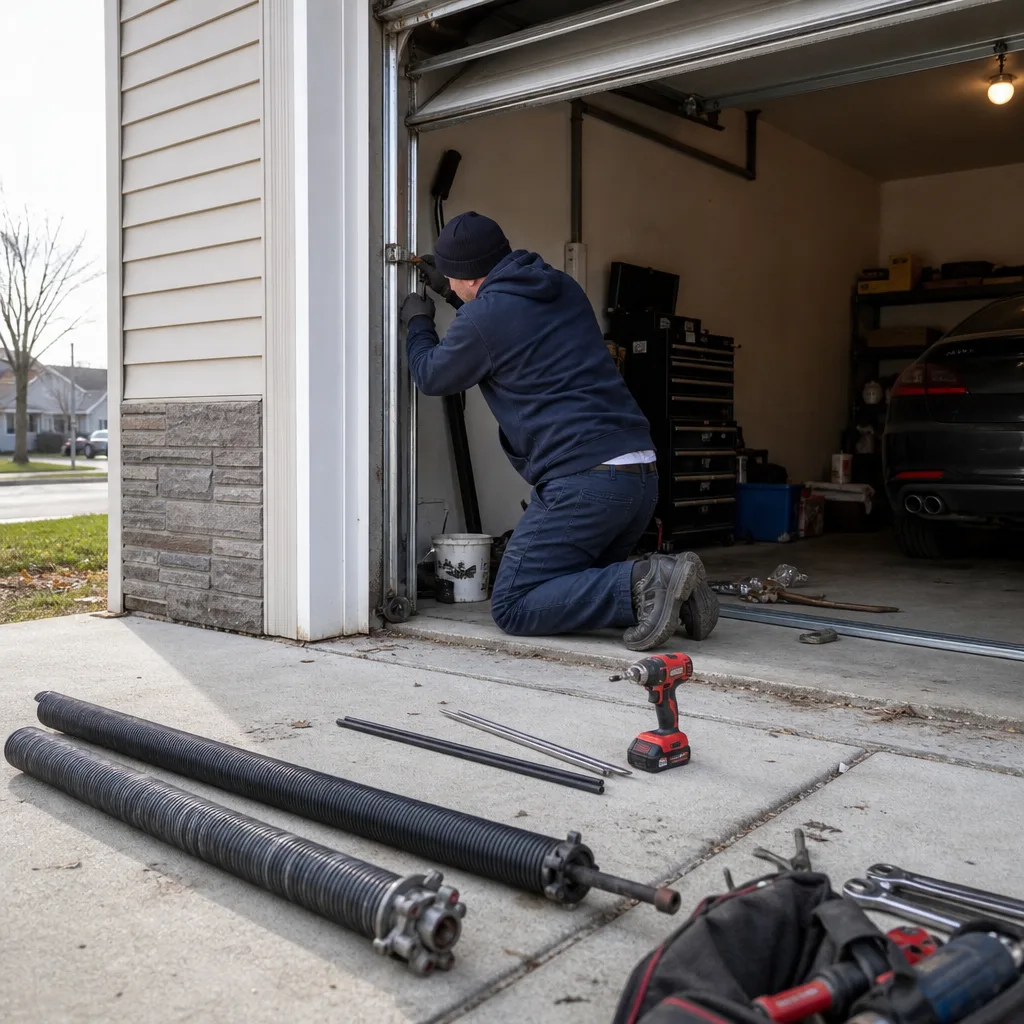
Last updated November 21, 2026
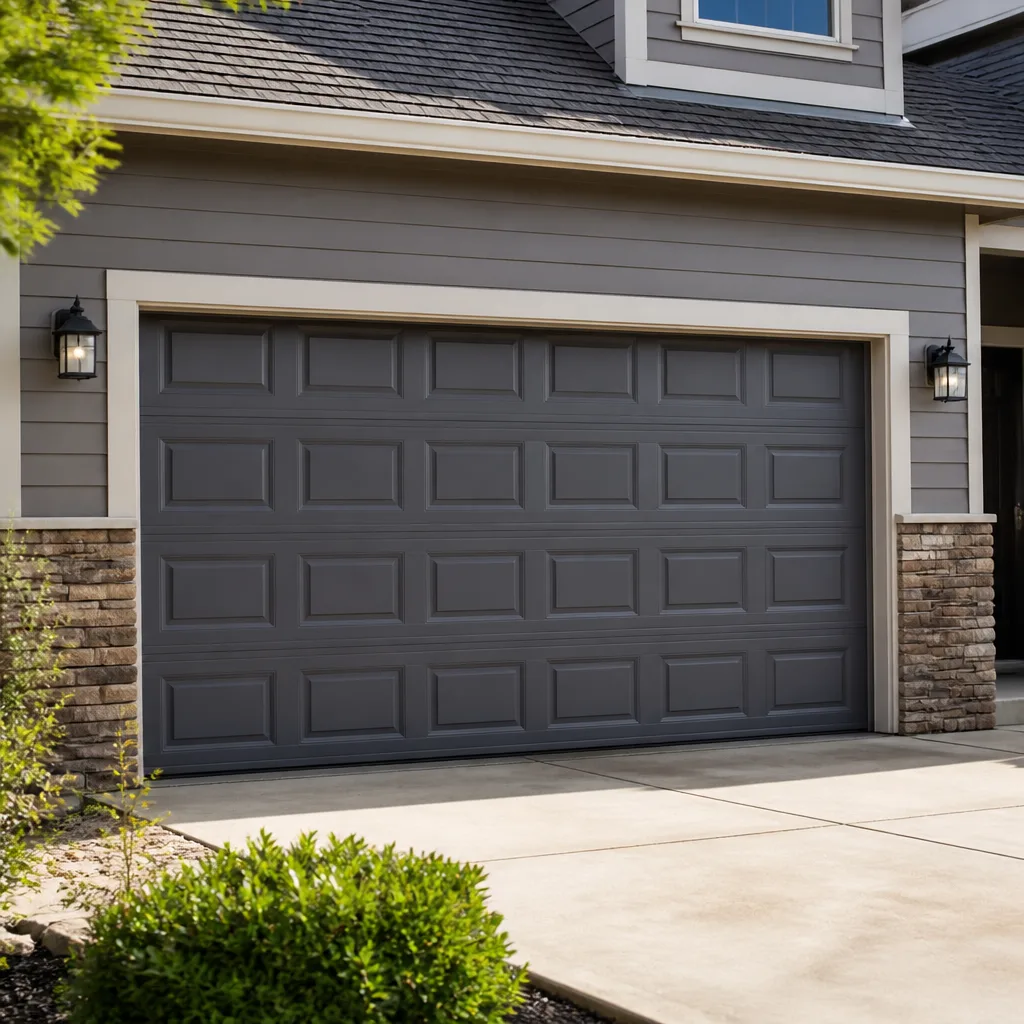 Raised-panel steel
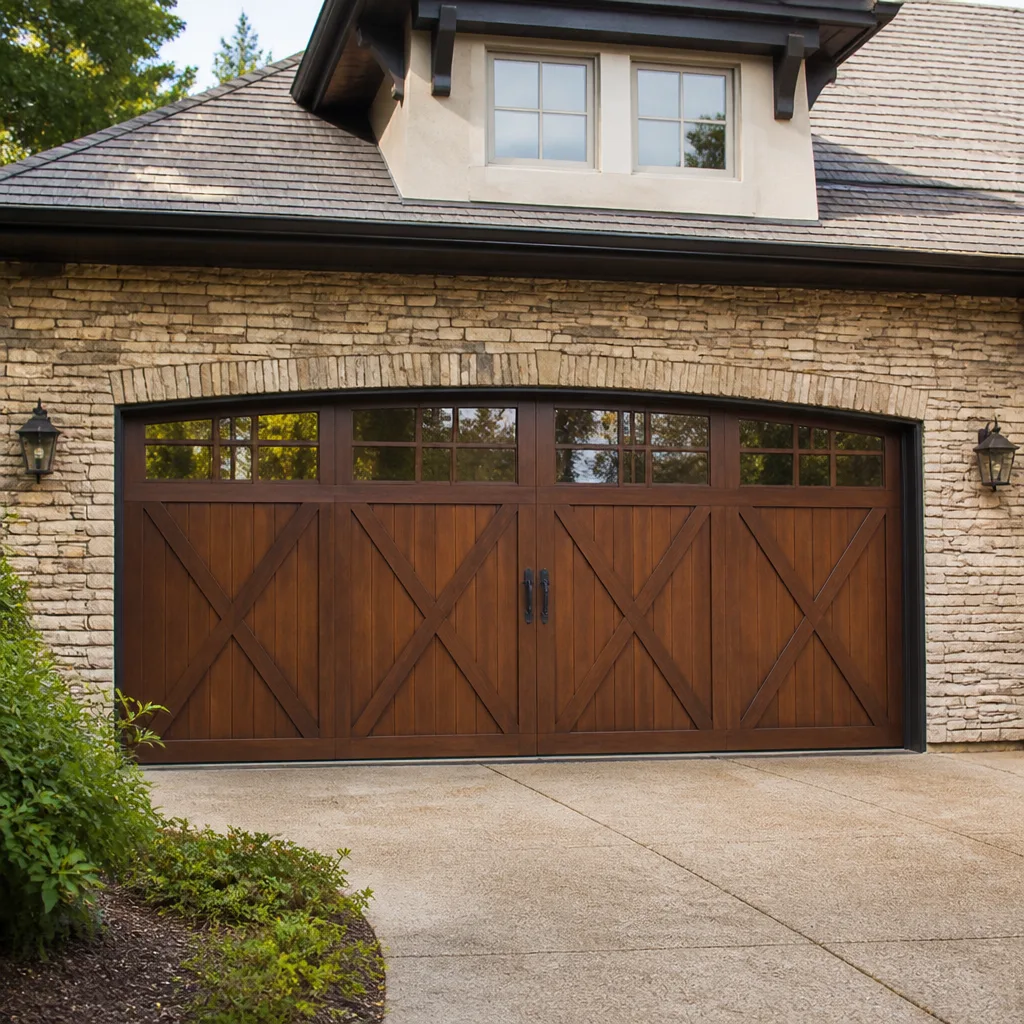 Carriage house
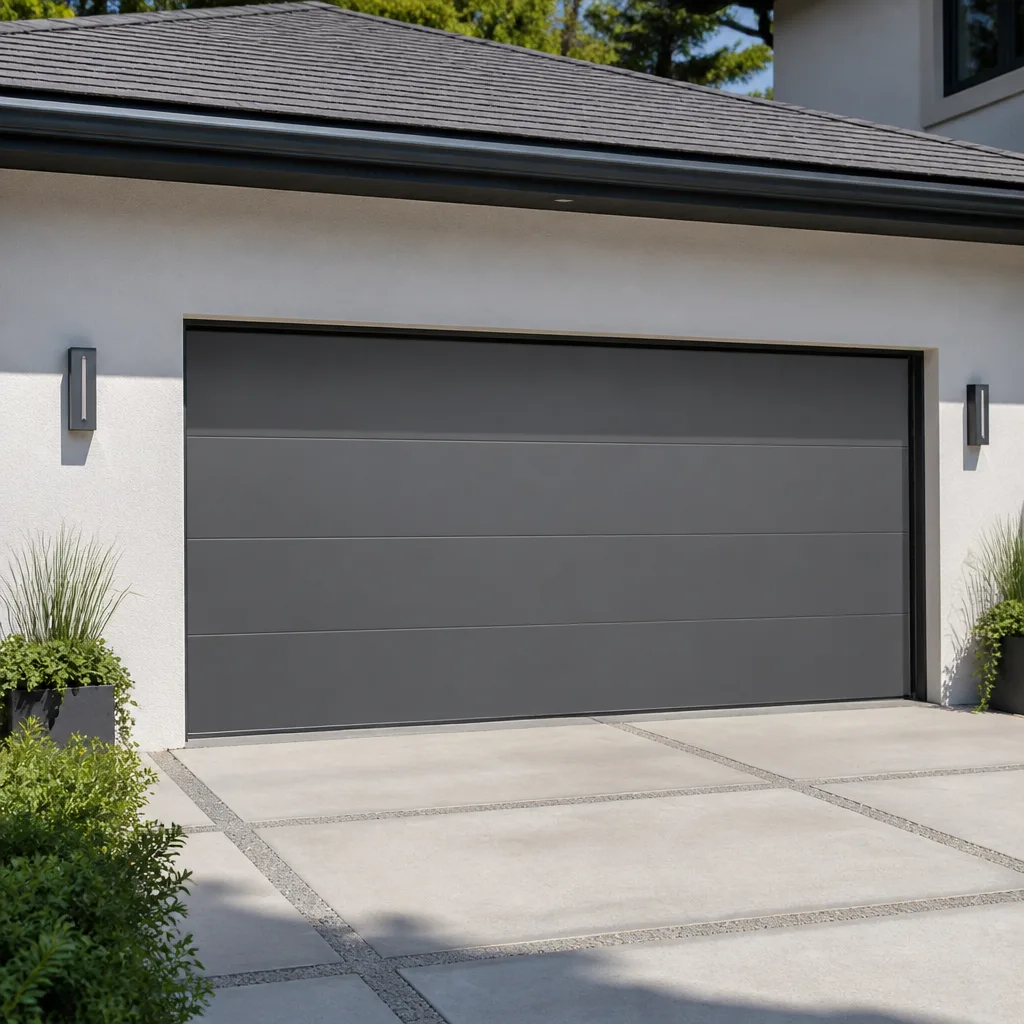 Modern flush
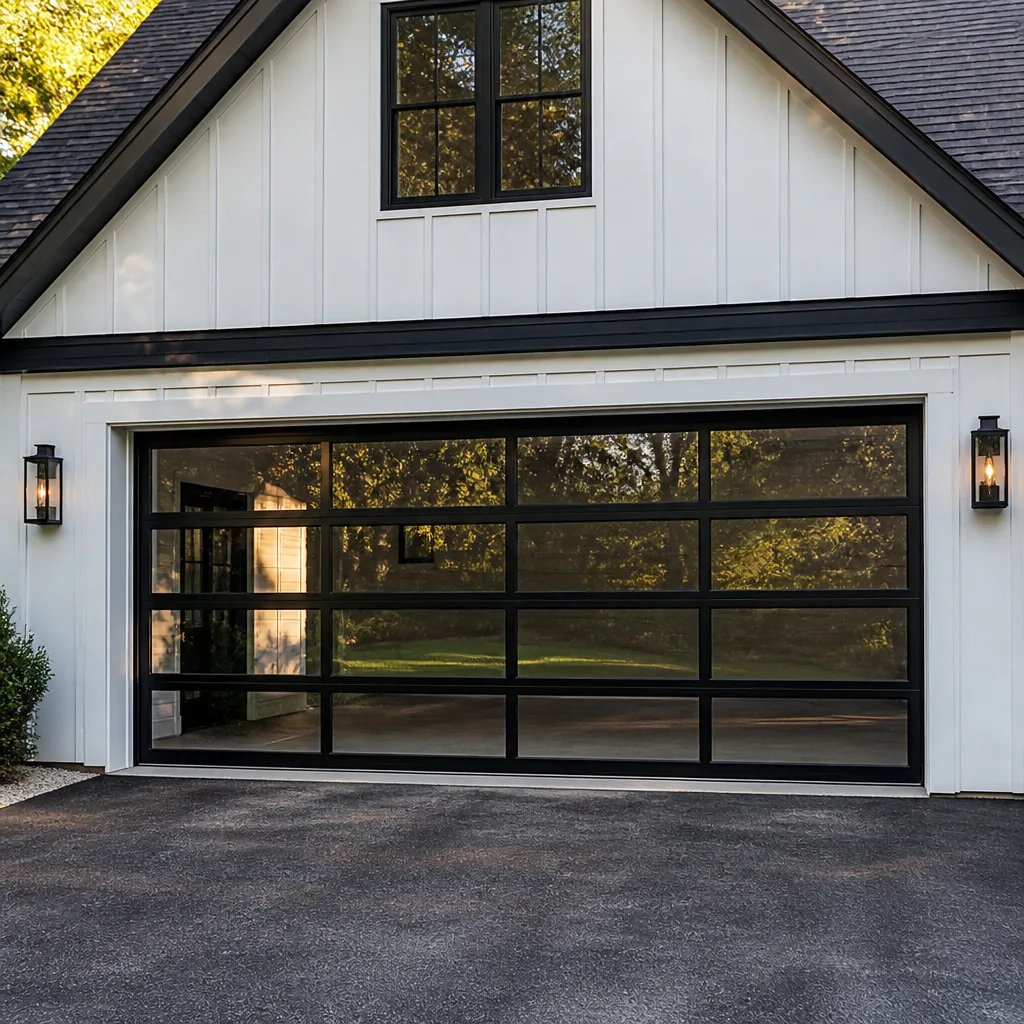 Full-view glass
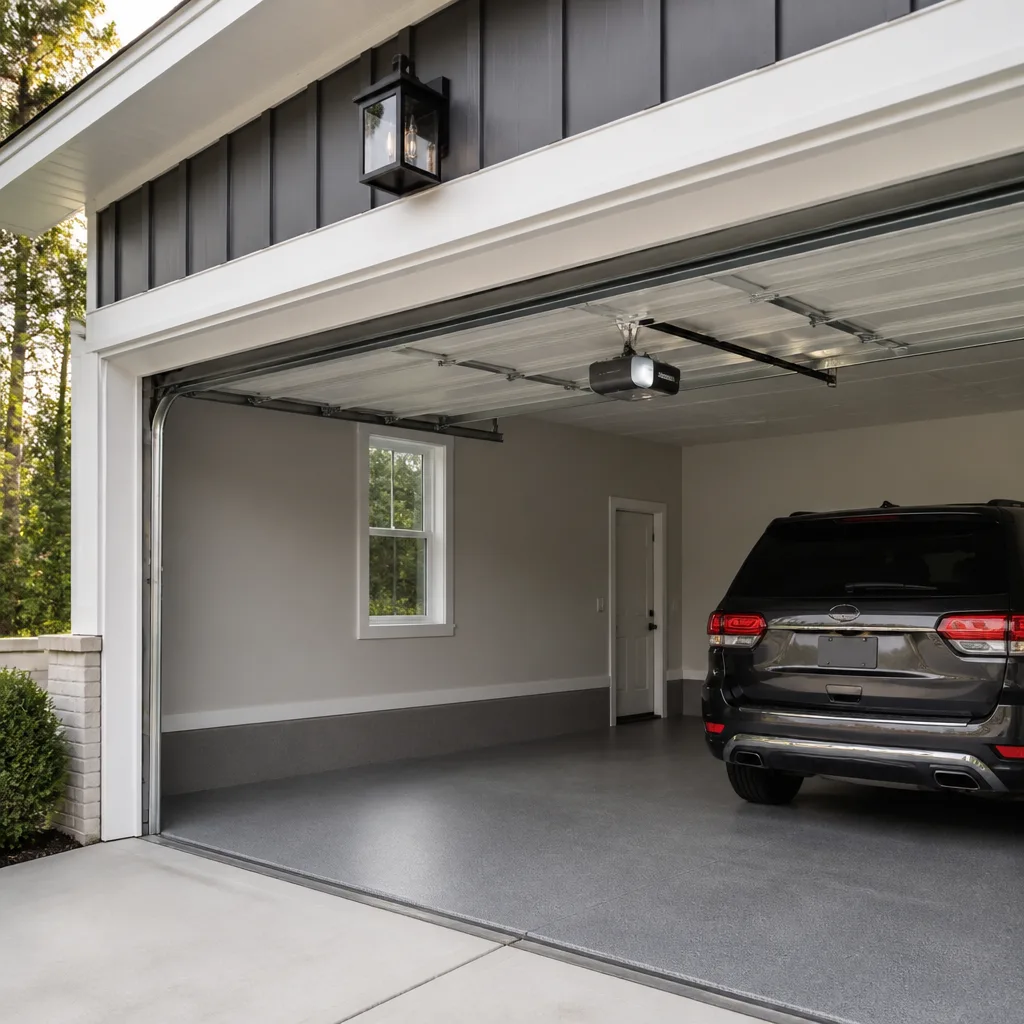 LiftMaster openers
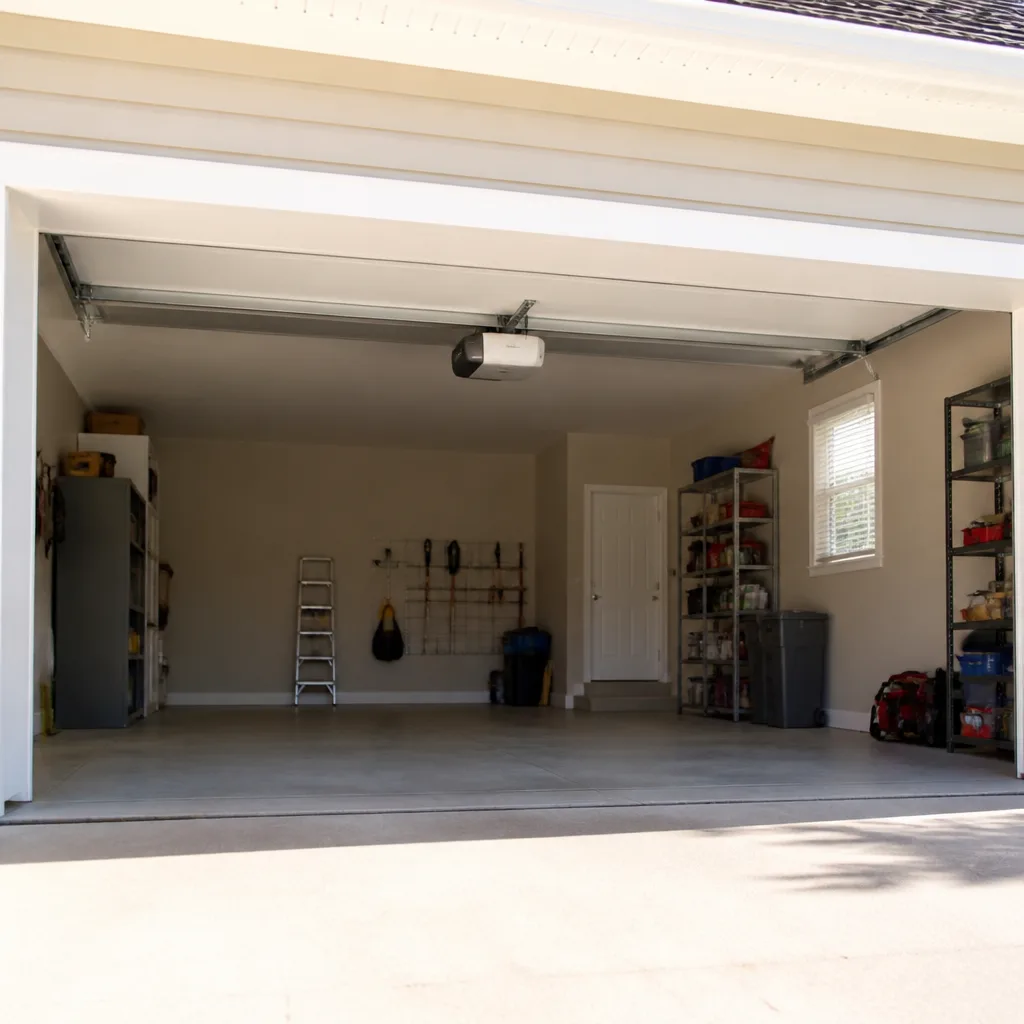 Chamberlain openers
Full 25-point door and opener safety check with every visit - springs, cables, rollers, tracks, and your LiftMaster or Chamberlain opener included
You get a price before we start. It does not change when the pro arrives.
Get your free estimateGarage Door Permits, Codes & Inspections in Northland, OH: What You Need to Know
Most Northland homeowners assume a garage door replacement never needs a permit, and for a straight swap of the same size door in the same opening, that’s usually true. The trouble starts when the project stops being a swap. Change the opening dimensions, cut into the header, add a new opener circuit, or convert part of the garage into living space, and you’ve stepped into Ohio Residential Code territory where a permit and an inspection are part of the job. We’ve watched simple door projects turn complicated because nobody checked first. This guide walks through which garage door projects in Northland need a permit, which don’t, how the electrical side works, and what buyers, sellers, and inspectors actually look for.
Quick Answer
In Northland, a like-for-like garage door replacement in the existing opening typically doesn’t require a building permit, but new installations, changes to the opening size or header, wall alterations, and any new electrical circuit for an opener usually do. The Ohio Residential Code governs the structural and fire-separation requirements, and opener wiring falls under the Ohio Electrical Code. Always confirm the specifics with the City of Northland or Franklin County building department before work begins, because requirements can shift with the scope of the project.
Styles & brands we work with
- Raised-panel steel
- Carriage house
- Modern flush
- Full-view glass
- LiftMaster openers
- Chamberlain openers
Table of Contents
- Do You Need a Permit for a Garage Door in Northland?
- What Ohio Residential Code Says About Garage Door Openings
- Opener Wiring and the Ohio Electrical Code
- What a Home Inspector Looks For During Resale
- How to Check Permit History in Franklin County
- When to Pull a Permit vs. Skip It
- Common Mistakes to Avoid
- When to Call a Professional
Do You Need a Permit for a Garage Door in Northland?
For most homeowners, the answer comes down to one question: does the work change the structure or the opening, or does it simply replace what’s already there? Replacing a worn Clopay door with a new Clopay door of the same dimensions in the same track and opening is generally treated as routine maintenance, not a permitted alteration. The door is a component being swapped, not a building element being modified.
The picture changes as soon as the scope involves any of the following. These are the situations where pulling a permit up front protects you, your insurance, and the resale file:
- New opening or size change. If you’re widening, raising, or repositioning the opening to fit a larger door, the header and framing are being modified, and that’s structural.
- Header modification. Cutting, sistering, or reinforcing the header above the opening is a structural change that requires a permit and inspection in nearly every Ohio jurisdiction, including Northland.
- Converting a garage to living space. Closing in the door and adding framing, insulation, and wall finishes triggers fire-separation, egress, and sometimes zoning review.
- New electrical for an opener or door hardware. Adding a new dedicated circuit, outlet, or hardwired opener in an area that didn’t have one is electrical work and is covered under the Ohio Electrical Code.
- New construction where a garage door opening is part of the scope. Any new-build garage opening in Northland is captured under the full building permit.
Simple panel replacements, track alignments, spring swaps, and opener repairs are service work, not permitted construction. If you’re unsure whether your project crosses the line, a quick call to the Northland building department clears it up fast. When the work is routine repair, we handle it directly through our garage door repair service.
What Ohio Residential Code Says About Garage Door Openings
Ohio Residential Code treats the garage door opening as part of the building envelope, not just a place where a door hangs. That framing matters because the code sections that touch garage door openings are the same ones that govern headers, wall bracing, and fire separation. Getting any of these wrong leads to problems at inspection, at sale, or both.
The areas that most often apply to garage door work in Northland:
- Header sizing and load path. The header above a garage opening carries the load of the wall above it. Any change to the opening dimensions requires a header sized for the new span, engineered or prescriptively per the code tables. This is why widening an opening is a permit-level job, not a weekend framing project.
- Fire separation between garage and house. The wall between an attached garage and the house is a fire-rated assembly under the code, and penetrations or alterations that break that rating are inspection items. Door openings that are part of that wall have to maintain the required rating.
- Wind and impact resistance. Ohio has design wind speeds that affect garage doors, particularly on newer builds and replacements where the door is a rated component. Door labels and specifications can matter to the inspector on a permitted install.
- Egress and weatherproofing. If the garage shares a wall with living space, the door between garage and house must be a rated, self-closing assembly. Weatherstripping, thresholds, and door bottoms at the vehicle opening have code and inspection implications in some cases.
In our experience, most Northland homeowners only encounter the code directly when they’re doing something beyond a straight replacement. For full new installs, our garage door installation team works the sizing and header requirements into the estimate so there are no surprises during framing or inspection. If the opening has to be modified, we tell you before the job starts so you can pull the right permit through the jurisdiction that has authority over your property.
Opener Wiring and the Ohio Electrical Code
A garage door opener replacement is not permitted electrical work on its own. Plugging a new LiftMaster or Chamberlain into an existing ceiling outlet is a swap. Running a new circuit, adding an outlet, or hardwiring the unit is electrical work, and in Northland that’s where the Ohio Electrical Code applies.
Here’s how this plays out in practice:
- Same outlet, same location. Swapping an opener that plugs into an existing ceiling receptacle is a direct replacement. No electrical permit is needed.
- New outlet for an opener. If a garage had no powered opener and you’re adding one, the new outlet or circuit is electrical work. In Ohio, this typically requires a licensed electrician and an electrical permit through the local authority.
- Hardwired opener. A hardwired unit is part of the building’s electrical system and falls under the code and the permit scope.
- Disconnect and reconnect for repairs. An electrician isn’t required to unplug a cord-and-plug opener to service it, but permanent disconnection, rewiring, or relocation is electrical work.
Spring and cable work is the other safety-critical part of this trade, and it deserves its own warning. Garage door springs are under extreme tension and can cause serious injury if handled without proper tools and training. Never attempt to remove, adjust, or replace a torsion spring yourself. Our garage door spring repair service exists precisely because this is the part of the system that should never be a DIY job. If your opener needs service, our garage door opener repair team handles the mechanical side, and we’ll tell you when an electrician is the right call.
What a Home Inspector Looks For During Resale
Home inspectors don’t enforce code, but they do note conditions that suggest work was done without a permit or that present safety concerns. A garage door that looks structurally altered, an opener that’s been wired unusually, or a door with no safety reversal feature is a flagged item. In Northland, the inspection report on a home with a modified garage often becomes a negotiation point at closing.
The things an inspector typically checks:
- Door operation and balance. Does the door open and close smoothly, or does it bind, sag, or fall?
- Safety reversal. Openers manufactured in the last few decades have photoelectric sensors and a force-reversal feature. An old Genie or Craftsman opener without these will be flagged.
- Spring and cable condition. Visible wear, snapped springs, or fraying cables are noted, along with a recommendation to have them serviced by a professional.
- Structural changes to the opening. A header that’s been modified without a permit often shows up in the report as an “unverified modification” or “recommend further evaluation.” That language is what buyers and their agents use to ask for repairs or a credit.
- Fire separation at the garage/house wall. Gaps, missing door closers, or penetrations in the rated wall.
- Opener wiring and connections. Exposed splices, extension cords used as permanent wiring, or open junction boxes.
An inspector can’t always tell whether the work was permitted, but the permit history will. That’s the next section.
How to Check Permit History in Franklin County
Before you buy a home in Northland, or before you sell one, pulling the permit history on the property is one of the cheapest pieces of due diligence you can do. It’s how a buyer discovers that the door opening was modified without a permit, and it’s how a seller gets ahead of an issue before it delays a closing.
Here’s the process, in order:
- Identify the permitting authority. Depending on where in Northland the property sits, the permit record may live with the City of Northland, Franklin County, or a township. Ask your real estate agent or title company which jurisdiction issued the original building permit.
- Request the permit history. Most Ohio jurisdictions offer an online portal or a records request form. You’ll need the property address and, in some cases, the parcel number.
- Compare the permits to the actual structure. If the house has a garage that was added or modified, there should be a corresponding building permit, and usually a final inspection on file. A permit that was opened but never closed is a red flag.
- Order a zoning verification letter if needed. For properties with a garage conversion, this confirms the use is legal and not just unpermitted.
- Get a professional inspection if the record is unclear. A licensed home inspector or a structural engineer can evaluate the actual opening and header. We can review the door and opener installation, and the structural side is an engineer’s call.
Doing this step early prevents the kind of late-stage delay that happens when a buyer’s lender flags an unpermitted alteration right before closing. It’s a small amount of paperwork that saves a large amount of stress. For a broader look at how repair work fits into the picture, our Garage Door Repair Northland page lays out the services we cover.
When to Pull a Permit vs. Skip It
This is the heart of the question most Northland homeowners actually have. The line isn’t always intuitive, but it’s consistent once you understand the logic: if the work changes the structure, the opening, or the electrical system in a permanent way, it’s permitted. If it replaces a worn component with the same one, it isn’t.
A quick decision guide:
- Pull a permit: new door in a new opening, widened or heightened opening, header work, garage-to-living conversion, new electrical circuit for an opener, hardwired opener.
- Skip the permit: same-size door replacement, panel replacement, spring replacement, cable replacement, opener motor swap on existing outlet, track alignment, roller replacement, weatherstripping.
- Ask first: a door that requires a new track layout in the same opening but repositioned hardware, a swap to a heavier insulated door, or any change to the rated wall assembly.
The “ask first” category is where most confusion lives. A heavier door or a different hardware configuration sometimes triggers structural review even when the opening dimensions don’t change, and the safe move is to confirm with the building department before the door order goes in. If you’re planning a replacement, our garage door installation team walks through the permit question at the measurement stage, so the answer is clear before any money changes hands.
Common Mistakes to Avoid
- Assuming a heavier door doesn’t affect anything structural. A much heavier insulated door can add load to the header and hinges. If you’re moving from a basic steel door to a heavily insulated Clopay or Amarr, confirm the opening can take the extra weight before you order.
- Skipping the electrical permit when the opener circuit is new. A homeowner who adds a ceiling outlet to run a new opener risks failing an electrical inspection later. That kind of work belongs with a licensed electrician, and the permit is part of the job.
- Doing spring work without training. Torsion springs under tension can release violently and cause serious injury. This is a call-a-professional item, every time, and it’s the most common serious-injury mistake in the trade.
- Closing out a permit without a final inspection. An open permit on the record is worse than no permit in some buyers’ eyes, because it suggests work that was never verified.
- Ignoring the fire-rated wall between garage and house. Punching a hole in the wall for a new outlet, or not replacing rated drywall after a modification, is a code issue that inspectors flag at resale.
- Assuming the city and the county keep the same records. In Franklin County, the permitting authority depends on the jurisdiction, and pulling the wrong one wastes time.
- Forgetting to check permit history when buying a Northland home. Buyers who skip this step often discover an issue at the worst possible moment, after the inspection period has closed.
When to Call a Professional
Call a professional when the work involves anything that could hurt someone or fail an inspection. Snapped springs and frayed cables are the obvious case, because they store enough energy to break bones and the wrong repair can fail on the next cycle. Opener failures that aren’t a battery or a sensor alignment usually need diagnostic tools, especially on LiftMaster and Chamberlain units with complicated logic boards. If your door has begun to bind, sag, or pull away from the opening, that’s structural, and it deserves an on-site evaluation before you operate it again. And if you’re planning any change to the opening or the header, get the sizing and permit question sorted before you order the door.
Garage Door Repair Northland offers free estimates in Northland. Call (866) 347-6067 and we’ll tell you exactly what the job involves, what the permit picture is, and what it’ll cost. Our technicians have up to 8 years of experience, and we only do garage doors, which is why we can tell you quickly when a job is out of scope for us and needs an electrician or an engineer instead.
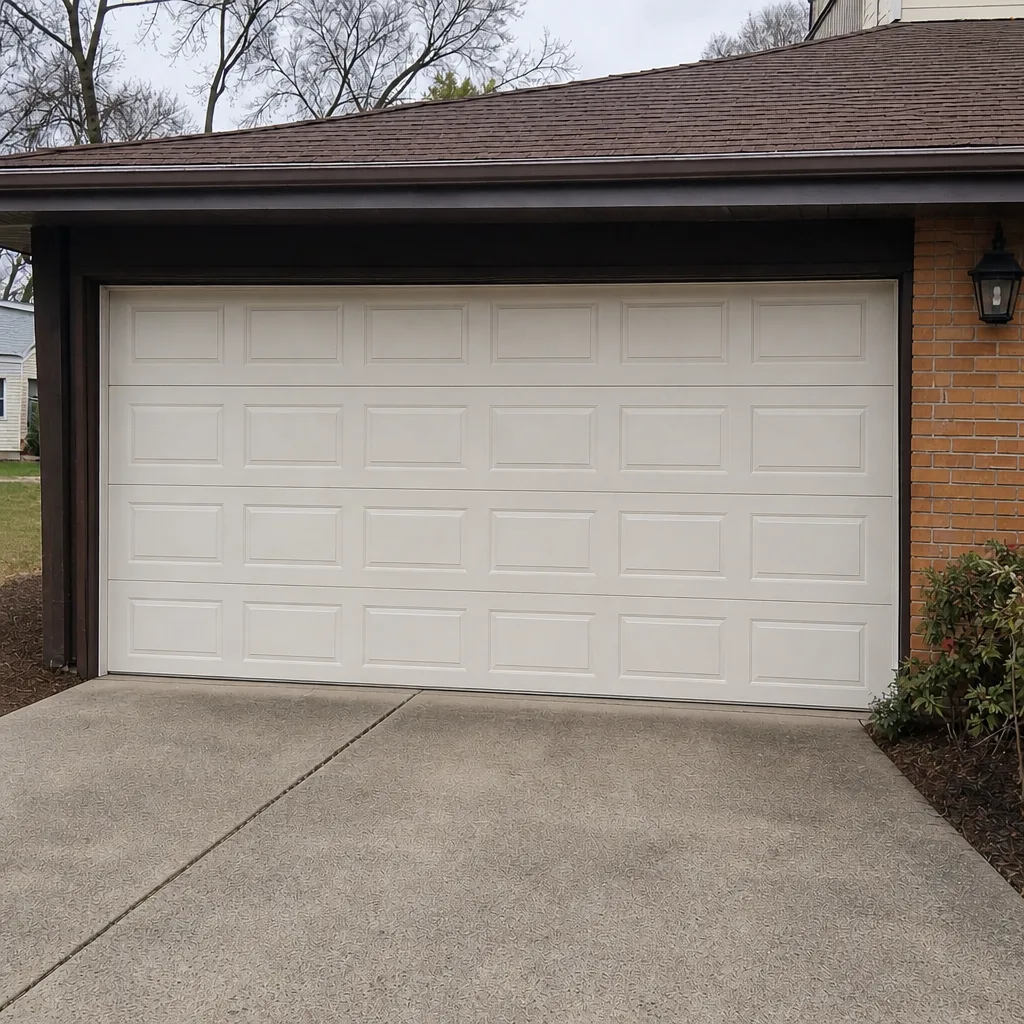
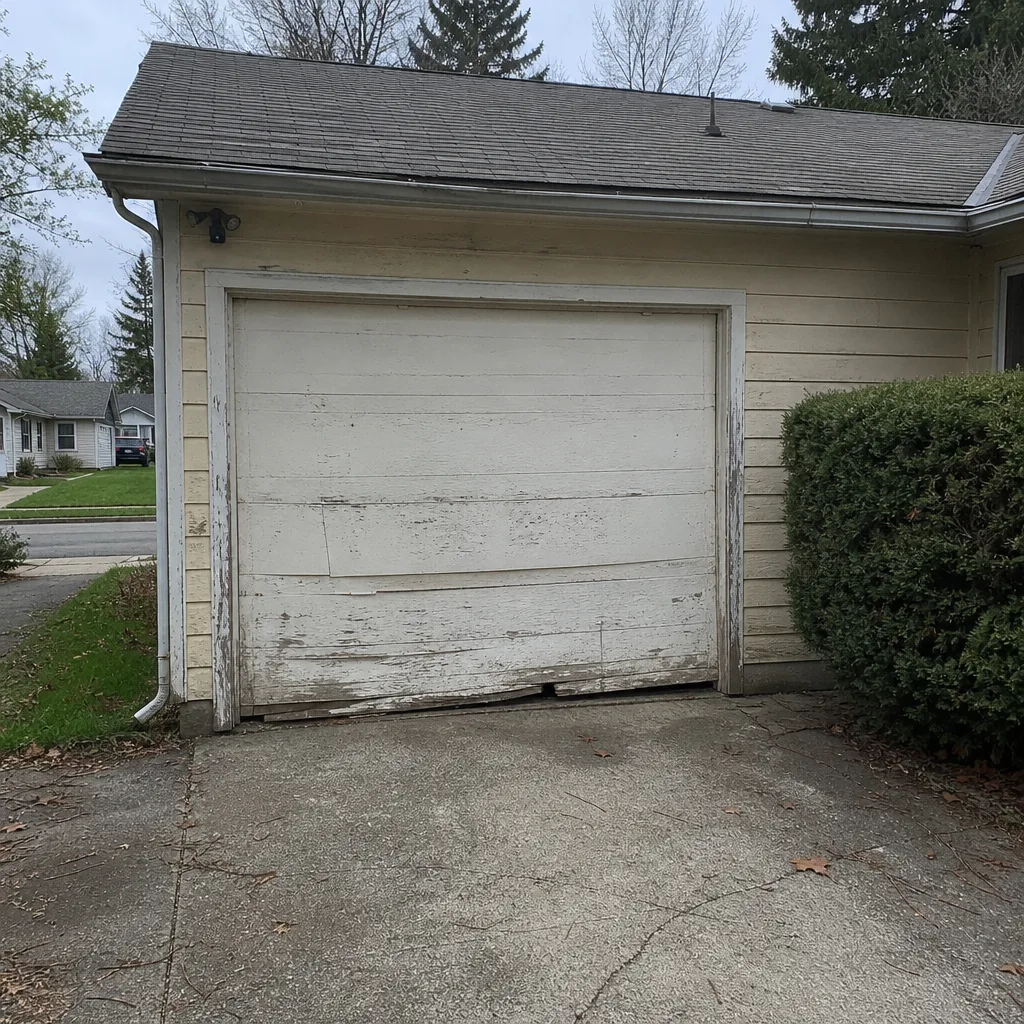
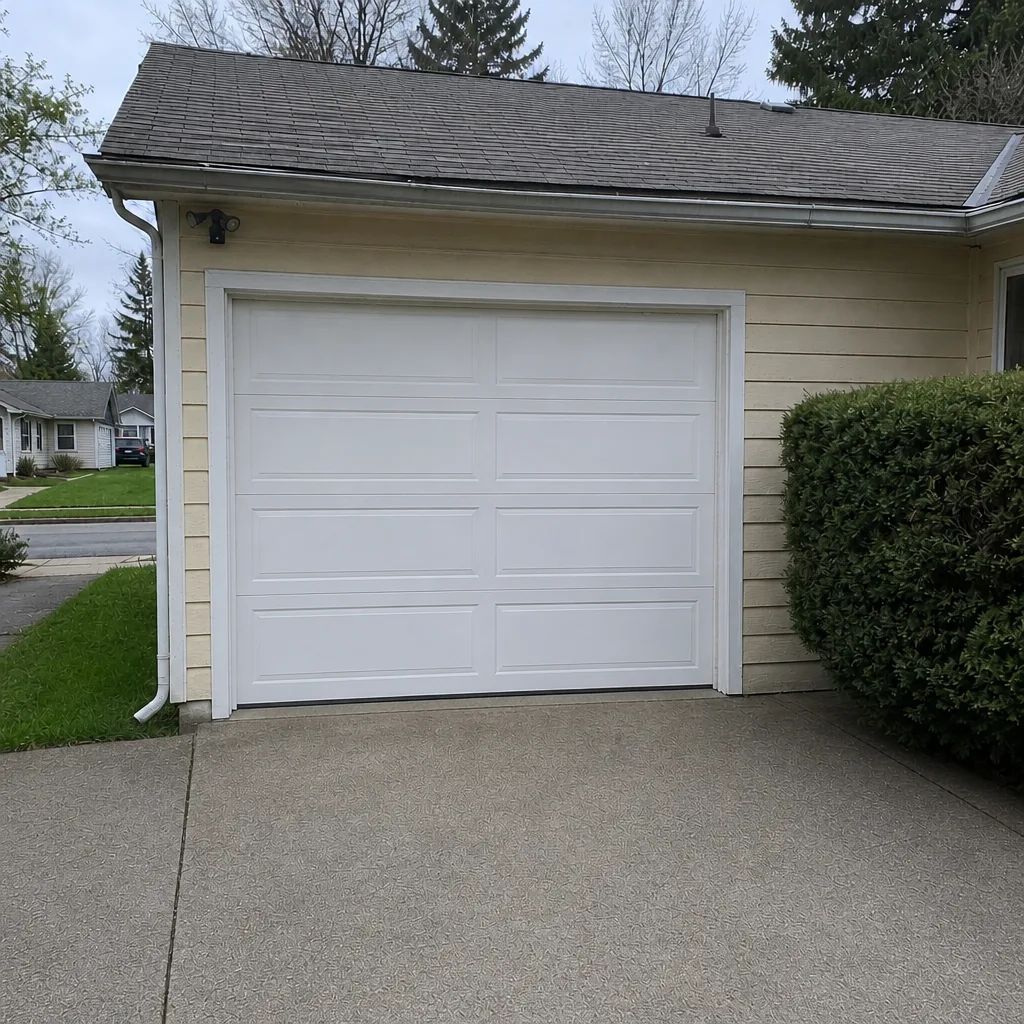
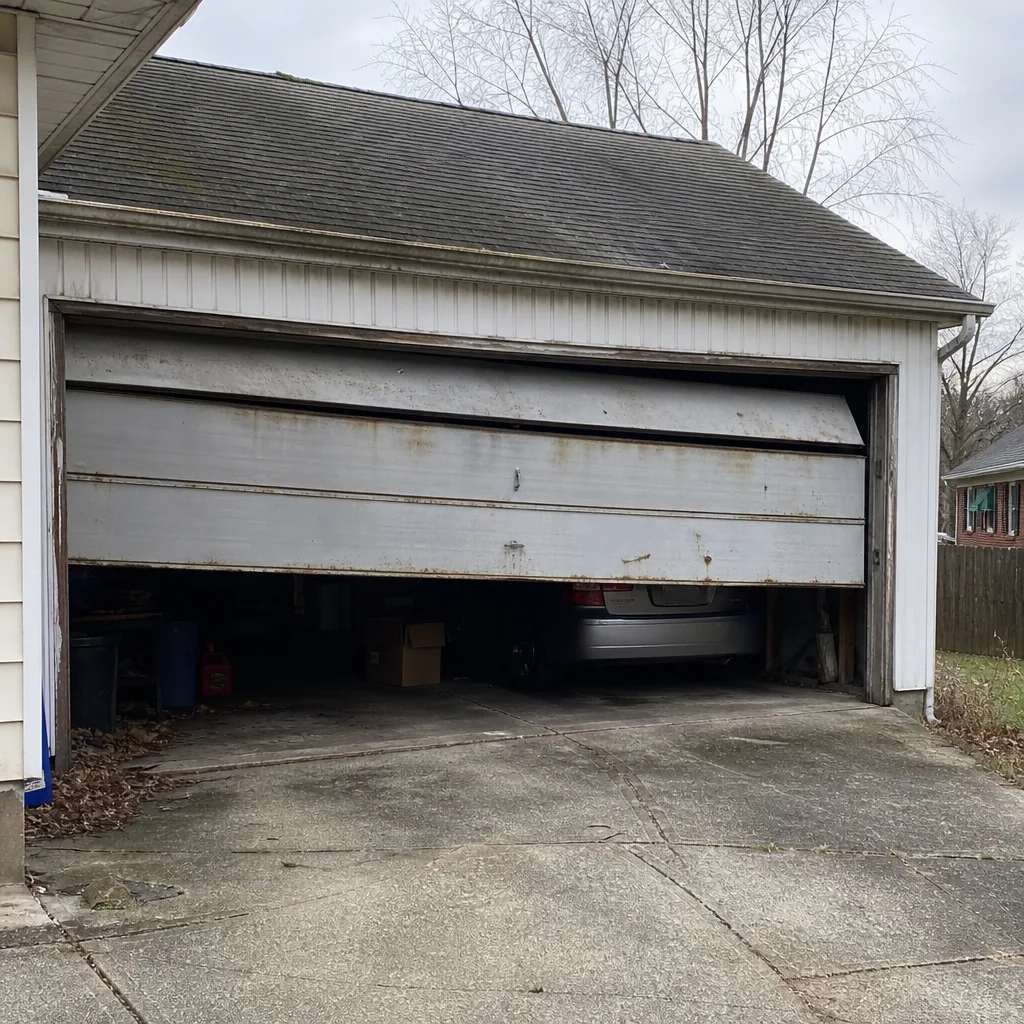
See the difference
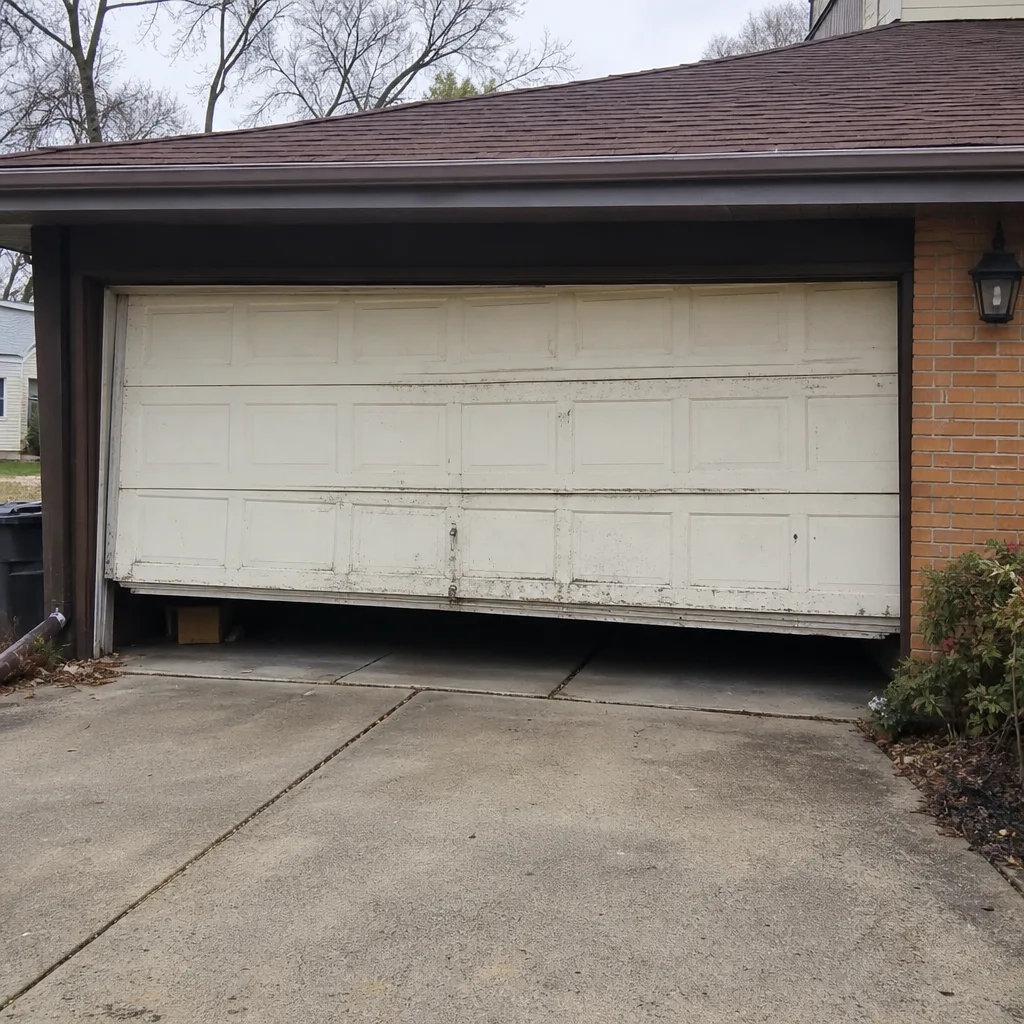 Before
 After
 Before
 After
 Before
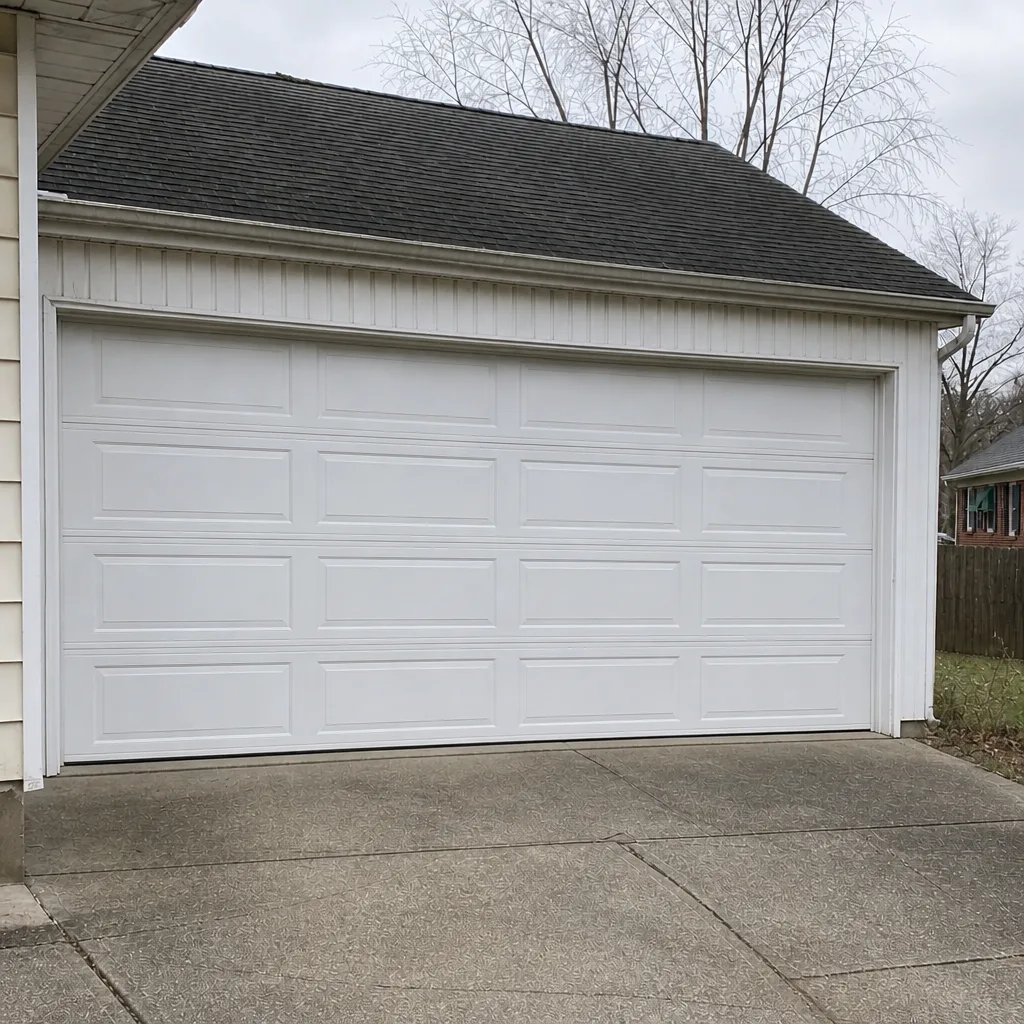 After
Frequently Asked Questions
Usually not, as long as it’s a like-for-like replacement of the same size door in the same opening. The permit requirement typically kicks in when the opening size, header, or electrical system changes, or when the door is part of a new build or conversion. Confirm with the authority that issued your home’s original building permit before the install. Call (866) 347-6067 for a free estimate – we’ll walk through the permit question during the measurement.
The Ohio Residential Code sets the minimum standards, but it’s enforced by the local building department that has jurisdiction over the property. In Franklin County that can be the City of Northland, a township, or another authority depending on where the home sits. Ask the department that issued your original building permit, and they’ll tell you whether your project needs a permit and an inspection.
Yes, if the opener requires a new outlet, a new circuit, or hardwiring. A direct replacement that plugs into an existing ceiling outlet is a swap and doesn’t need electrical work. Anything that adds permanent electrical infrastructure falls under the Ohio Electrical Code and typically needs a licensed electrician and an electrical permit. Our garage door opener repair team can tell you which category your installation falls into.
It can. Insurers and buyers both care whether structural alterations were permitted and inspected, and a modified opening without a permit can trigger questions during underwriting or a delay at closing. The simplest safeguard is to check permit history before listing, and to pull the permit before any structural or electrical change. If you’re not sure what you’re looking at, call (866) 347-6067 and we’ll help you interpret what the door and opener condition suggests.
Inspectors look at door balance and operation, safety reversal features, spring and cable condition, structural changes to the opening, and fire separation at the garage/house wall. They don’t enforce code, but they flag conditions that suggest unpermitted work or a safety issue. If a report comes back with door or opener items, call (866) 347-6067 for a free assessment – estimates are free and we service all 8 major brands.
Contact the jurisdiction that issued your home’s original building permit and request the permit history. Most Ohio jurisdictions offer online records or a records request form, and you’ll need the property address and parcel number. Compare any garage-related permits against the actual structure and look for open permits that were never closed. Call (866) 347-6067 if you want a professional read on the door and opener installation while you’re at it.
The Bottom Line
The Northland garage door permit picture is simpler than most homeowners fear. Like-for-like replacements usually need no permit, new installations and opening changes do, and any permanent electrical work for an opener belongs with a licensed electrician and an electrical permit. The Ohio Residential Code governs the structural and fire-separation side, and the Ohio Electrical Code governs the wiring side. If you’re selling, pull the permit history before the listing goes live. If you’re buying, do it before the inspection period ends. And if the job touches a spring, a header, or a new circuit, call a specialist. Garage Door Repair Northland is here when you need a straight answer on scope, size, and pricing – call (866) 347-6067 for a free estimate, and we’ll get your door moving the right way.
Written by the team at Garage Door Repair Northland.